Skip to content
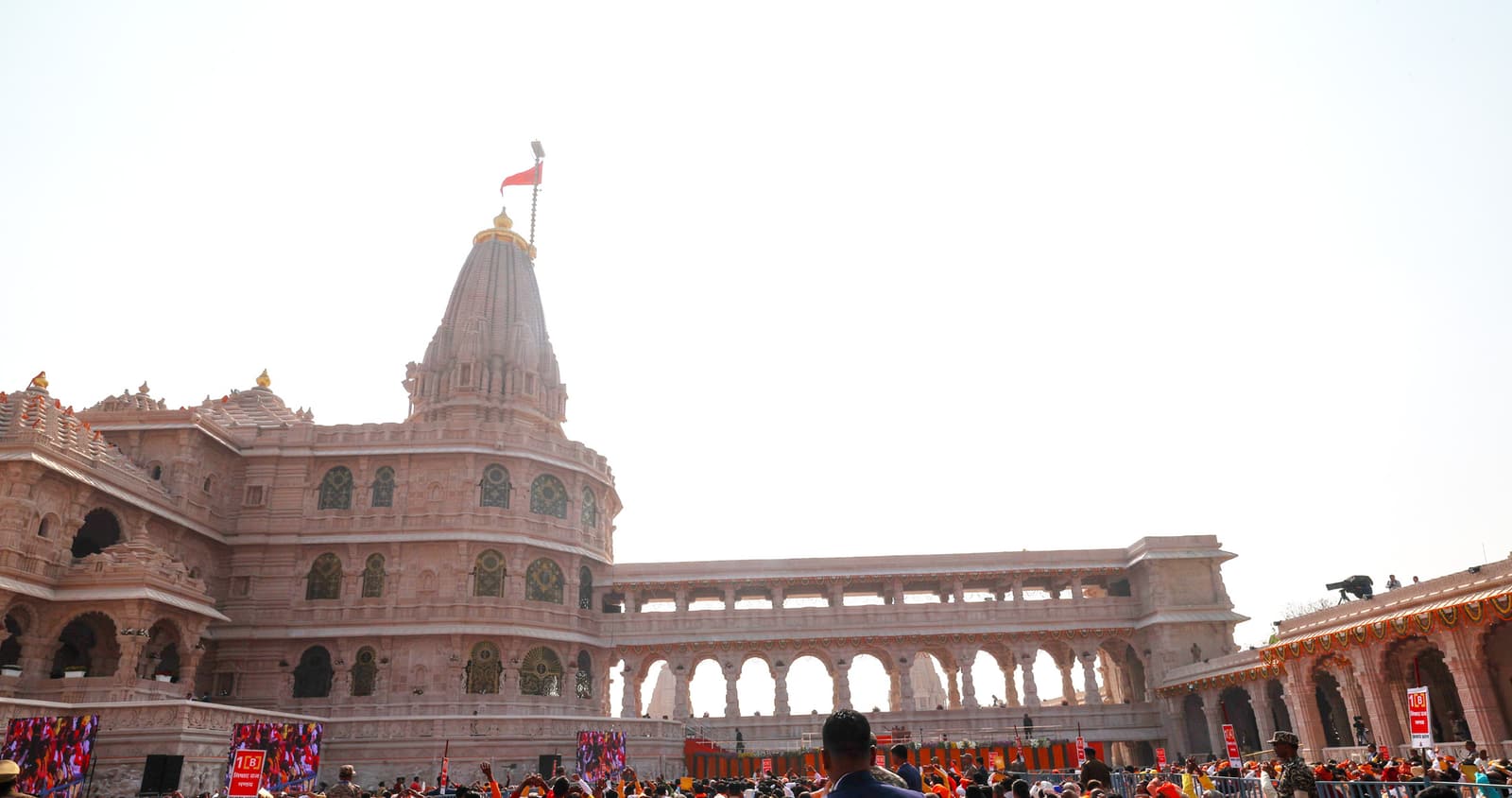
The carved sandstone Ram Mandir in Ayodhya with its tall shikhara, seen from the front
Independent visitor & pilgrim guide

Plan your visit to the Ram Mandir, Ayodhya

Darshan and aarti, security rules, the temples and ghats around Ram Janmabhoomi, trains, flights and hotels — everything you need for a calm, well-planned visit to Ayodhya.

✔ Darshan is free — we do not sell passes⭐ Guided tours via GetYourGuide⚡ Free cancellation on most tours
Why visit Ayodhya?

The city of Lord Ram, on the banks of the Saryu

Ayodhya, in Uttar Pradesh, is revered by Hindus as the birthplace of Lord Ram and is one of the seven sacred cities (Sapta Puri) of Hinduism. The Shri Ram Janmabhoomi Temple — the Ram Mandir — was consecrated on 22 January 2024 and has since become one of the most visited pilgrimage sites in India.

This is an independent guide, not the official temple website. We explain how a visit works in practice — what you can and cannot carry in, when the queues are shortest, which other temples and ghats are worth your time — and point you to the official Shri Ram Janmbhoomi Teerth Kshetra trust for passes and current timings.

22 Jan 2024consecration (Pran Pratishtha)
≈135 kmfrom Lucknow
Oct–Marmost comfortable months
The Ram Mandir decorated with flowers on the day of its consecration
Traveller favourites

Ayodhya tours from Lucknow, Varanasi & Delhi

Guided day trips and short packages with a car, driver and guide — bookable through GetYourGuide. Tours cover transport and guiding; darshan itself is always free. Tap any tour for live prices.

Live availability

Book an Ayodhya tour

Real-time prices and availability, straight from GetYourGuide. Free cancellation on most experiences.

Powered by GetYourGuide
What to see

Temples, palaces and ghats of Ayodhya

The Ram Mandir is the heart of the visit, but Hanuman Garhi, Kanak Bhawan, Ram ki Paidi and the evening aarti on the Saryu are what make a day in Ayodhya complete.

The Ram Mandir in Ayodhya seen across its forecourt, filled with visitors on a festival day Ram Mandir & Ramkot

Ram Mandir

The Shri Ram Janmabhoomi Temple

The great sandstone temple at the place revered as the birthplace of Lord Ram. Built in the Nagara style and consecrated on 22 January 2024, it houses the idol of Ram Lalla and is the reason most visitors come to Ayodhya.

The brightly painted arched entrance of Hanuman Garhi temple in Ayodhya Ram Mandir & Ramkot

Hanuman Garhi

The hilltop fortress of Hanuman

A fort-like temple on a mound in the middle of town, reached by a flight of 76 steps. Pilgrims traditionally come here first to ask Hanuman, guardian of Ayodhya, for permission to visit Lord Ram.

The cream-coloured palace facade and entrance steps of Kanak Bhawan in Ayodhya Ram Mandir & Ramkot

Kanak Bhawan

The golden palace of Sita and Ram

An elegant palace-temple a short walk from the Ram Mandir, dedicated to Ram and Sita. Tradition says Queen Kaikeyi gave it to Sita after her wedding; the present building dates from 1891.

The ornate painted gateway of Dashrath Mahal in Ayodhya with its Hindi name board Ram Mandir & Ramkot

Dashrath Mahal

The palace of King Dashrath

A colourful temple-palace in Ramkot on the site associated with the royal residence of Dashrath, father of Lord Ram. Its painted gateway opens onto a courtyard filled with the sound of bhajans.

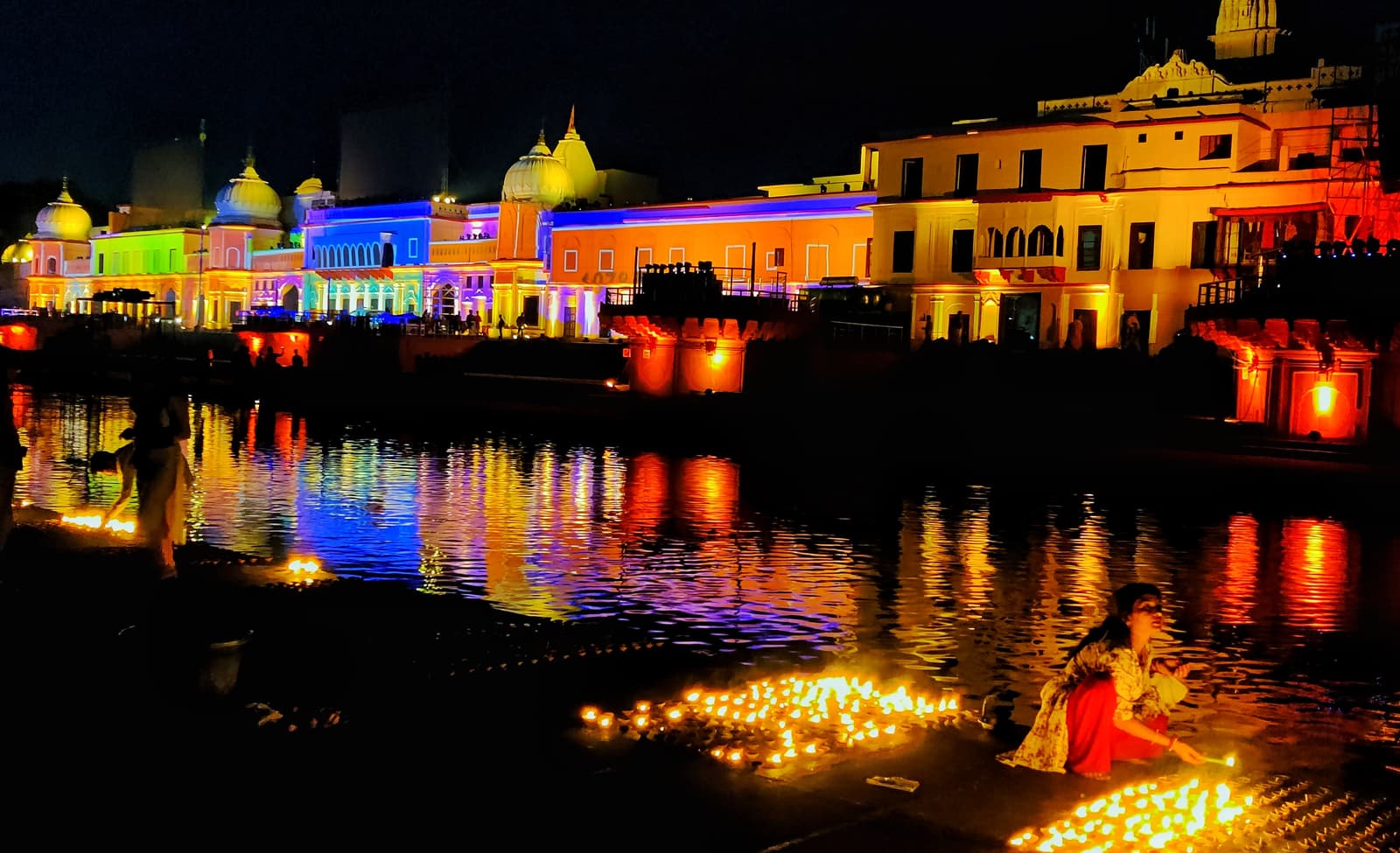
Temples lining the water at the ghats of Ram ki Paidi in Ayodhya at dusk Saryu riverfront

Ram ki Paidi

The ghats where Ayodhya gathers at dusk

A long series of bathing ghats along a channel of the Saryu, lined with temples and lit up after dark. It is the stage for Deepotsav and, with neighbouring Naya Ghat, the place to watch the evening Saryu aarti.

A priest seated with ritual offerings in front of the temples at Guptar Ghat, Ayodhya A short ride away

Guptar Ghat

The quiet ghat of Lord Ram’s final journey

A peaceful 19th-century ghat on the Saryu on the Faizabad side of the city, where tradition holds that Lord Ram entered the river to return to his divine abode. Old temples, wide steps and boat rides make it Ayodhya’s calmest riverside.

Where to stay

Stay close to the temple

Hotels in Ayodhya for an early-morning darshan, and comfortable bases in Lucknow if you are visiting as a day trip — with live rates on Trip.com.

Ira by Orchid, Ayodhya

★★★★

A four-star hotel from the Orchid group that opened in 2024 on the Faizabad side of the city — one of the more polished full-service options in Ayodhya.

  • Modern branded rooms
  • On-site restaurant
  • A drive from the temples — plan transport

The Ramayana Hotel, Ayodhya

★★★★

A large four-star property built for the new wave of pilgrims, on the outskirts of Ayodhya.

  • Spacious, newer rooms
  • Suited to families and groups
  • Parking for those arriving by car

Amritara Ramila Kutir Ayodhya

★★

A small, simple stay near Ram Katha Park and the Saryu, popular with guests for its location by the ghats.

  • Near Ram Katha Park and the river
  • Small and personal
  • Handy for the evening aarti
Plan your Ayodhya visit

See Ayodhya without the stress

Ram Mandir, Hanuman Garhi, Kanak Bhawan and the evening aarti on the Saryu in one well-planned day — with a car and a guide who knows the entry routes. Compare tours from Lucknow, Varanasi and Delhi.

Good to know

Visiting the Ram Mandir: your questions answered

Frequently asked questions

Is this the official Ram Mandir website?

No. AyodhyaRamMandir.com is an independent visitor guide. The temple is managed by the Shri Ram Janmbhoomi Teerth Kshetra trust; its official website is srjbtkshetra.org. We do not issue passes, accept donations or sell darshan.

Is there an entry fee or ticket for the Ram Mandir?

No. Darshan at the Ram Mandir is free for everyone. The trust has also offered free time-slot passes (often called Sugam Darshan) and aarti passes in limited numbers through its own channels. Nobody is authorised to sell darshan — treat any paid “VIP darshan” offer with caution. See our darshan guide.

What are the Ram Mandir darshan timings?

Timings are set by the temple trust and change with the season and on festivals. Darshan has typically run from early morning to late evening with a short midday pause. Always check the official trust website shortly before you travel.

Can I take my mobile phone inside?

Under the rules in force at the time of writing, mobile phones, cameras, other electronics and bags are not allowed inside the temple complex. Free lockers are provided near the entrance. Carry only essentials and your ID.

How do I reach Ayodhya?

By air to Maharishi Valmiki International Airport (AYJ), by train to Ayodhya Dham Junction or Ayodhya Cantt, or by road — Lucknow is about 135 km away. See getting to Ayodhya.

How much time do I need in Ayodhya?

One full day covers the Ram Mandir, Hanuman Garhi, Kanak Bhawan, Dashrath Mahal and the evening aarti at the Saryu. Two days is more relaxed and adds Guptar Ghat and a dawn visit to the river.